Morroco- Fès-Meknès
For two days, the ancient city of Fez set aside its familiar narratives of heritage to host a different kind of legacy—one built with algorithms, teamwork and youthful ambition. By bringing together students from Africa and beyond for the African Open Event of the VEX V5 Robotics Competition, the Groupe Scolaire Aljabr transformed education into a living, collaborative experiment, and positioned Morocco as a quiet but confident convenor of the continent’s technological aspirations.
For two days, the ancient city of Fez set aside its familiar narratives of heritage to host a different kind of legacy—one built with algorithms, teamwork and youthful ambition. By bringing together students from Africa and beyond for the African Open Event of the VEX V5 Robotics Competition, the Groupe Scolaire Aljabr transformed education into a living, collaborative experiment, and positioned Morocco as a quiet but confident convenor of the continent’s technological aspirations.
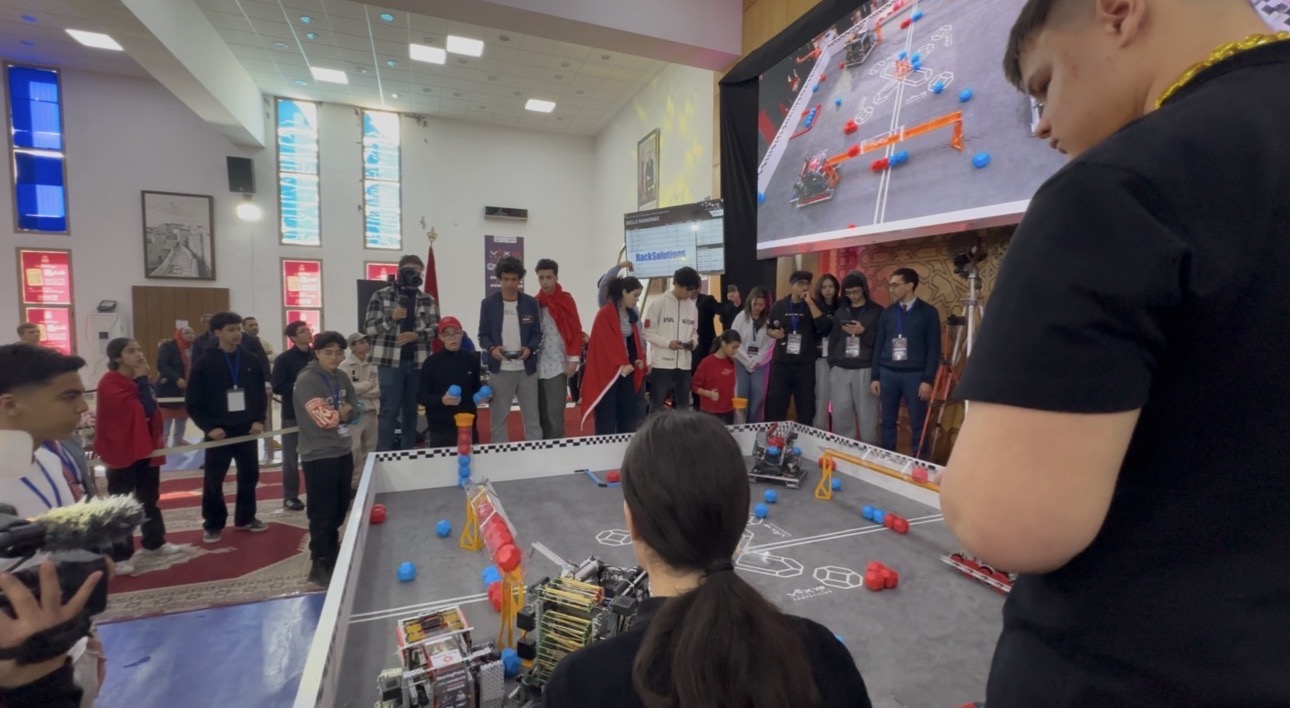
Fez is not usually associated with the hum of electric motors or the tension of countdown timers. Yet as the doors of the city’s municipal hall opened, the space filled to capacity with students, teachers and mentors eager to witness something rare: an international robotics competition where learning mattered more than rankings, and cooperation outweighed rivalry. Over two days, the venue—made available by the Fez City Council—became a packed arena of ideas, discipline and enthusiasm, animated by a Moroccan audience whose sportsmanship drew the respect of every visiting delegation.
At the center of this carefully orchestrated event stood the Groupe Scolaire Aljabr. More than a host, the school assumed full responsibility for the organization, mobilizing its staff, coaches and students to ensure a seamless experience. The effort was widely acknowledged by participating teams, who praised the professionalism of the logistics, the warmth of the welcome and the spirit of openness that prevailed throughout the competition. For Aljabr’s leadership, the event was a statement of intent: an affirmation that a school can be both a place of instruction and a platform for international dialogue.
The competition itself departed from conventional hierarchies. There were no first or second places in the traditional sense. Instead, awards recognized complementary strengths: teamwork, programming and robot control, design, innovation, jury distinction and sportsmanship. Romania and Andorra were honored for collaborative excellence, Romania again for programming mastery, Nigeria for innovation, Tunisia for the jury’s prize and Mauritania for exemplary sportsmanship. Aljabr’s own teams, alongside the Engineering School of Fez, earned recognition for robot design—symbolic of a host that competed without overshadowing its guests. By the end, every delegation left with an award, underscoring a shared conviction that progress in education is not a zero-sum game.
Invited as guests of honor, Romania and Andorra added a distinctly international dimension, enriching exchanges and elevating standards. Yet what lingered most was not the diversity of flags, but the convergence of values. Coaches such as Fannane—warmly applauded by the entire hall—along with his colleagues Chamidou and Amine, embodied a pedagogy grounded in rigor and encouragement. Their work illustrated how mentorship, when aligned with opportunity, can unlock confidence as much as competence.
An unexpected highlight came from the school’s student journalists. Moving with ease across the floor, capturing decisive moments and conducting interviews in Arabic, French and English, they offered a reminder that communication is itself a critical skill of the future. Their presence added a narrative layer to the competition, preserving its human texture beyond the machines.
As the final matches concluded and the applause faded, Fez returned to its usual rhythm. But something had shifted. For a brief moment, the city had hosted a model of education rooted in practice, equity and shared achievement. In doing so, the Groupe Scolaire Aljabr demonstrated that schools, when they dare to think beyond classrooms, can become bridges—between countries, disciplines and generations. The robots will be dismantled and packed away, but the conversations they sparked are only beginning.